
 Consumer Protection
Law Group


 Consumer Protection Law Group
Chevy made waves when it introduced the 2.7L turbo engine—a shift to replace traditional V6s with a smaller, more efficient powerplant. Featured in best-sellers like the Chevy Silverado 1500 and Chevy Colorado, this 4-cylinder turbo packs impressive torque (up to 430 lb-ft in later versions), heavy-duty towing capacity, and decent fuel economy. But as more and more drivers have put miles on these engines, a pattern of problems has started to emerge—and it’s raising eyebrows.
Some of the issues? Chugging idle, carbon buildup, and sporadic hesitation on load. Some owners also report excessive oil burn, sticking PCV valves, turbo lag, and even premature timing chain wear. In cold-weather climates, some owners have even experienced stalling upon start. While the engine still retains its fans—especially for its on-paper numbers—owners and mechanics are now wondering: is the Chevy 2.7 Turbo reliable enough?
In this article, we will address the most frequent Chevy 2.7 Turbo problems, why they are occurring, how GM has responded to date, and what you can do to keep your engine in top shape.
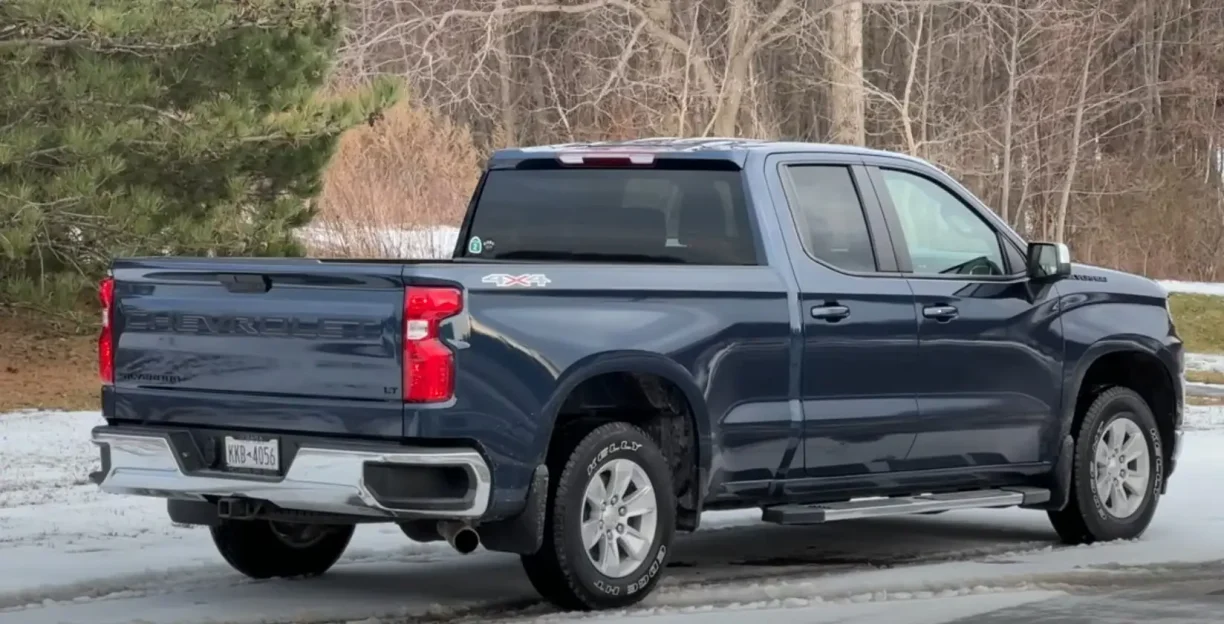
The 2022 Chevy 2.7L Turbo engine offers incredible torque, gas mileage, and towing capacity in a lightweight package — but it has its problems. As more people drive this engine under normal driving conditions, some common problems have arisen.
On the spec sheet, the 2022 Chevy 2.7L Turbo boasts a decent EPA estimate: 18 MPG city and 21 MPG highway. But many owners have complained that their real numbers are lower, sometimes significantly lower.
Why the Discrepancy?
There are several reasons for this:
Software calibration issues can affect fuel map and throttle response, disrupting efficiency. A reflash or software adjustment by the dealer could be helpful in certain situations.
The head gasket is an important engine component, acting as the interface between the cylinder head and engine block. When it fails, the consequence can be costly.
Symptoms:
Why It Happens in the 2.7 Turbo:
The turbo high-pressure configuration can put thermal stress on the gasket in the long term. There were some early failures due to gasket wear issues on certain 2022 models, leading to failures as early as 20,000–40,000 miles.
Warranty Coverage & What to Be Careful Of:
Fortunately, it’s under GM’s powertrain warranty (5 years/60,000 miles).
Dealerships may attempt to Band-Aid it, like putting coolant sealants on or topping off the fluid only, rather than a complete gasket replacement. You have the right to insist on proper repairs under warranty.
As the 2.7L Turbo is a direct injection engine, the fuel is pumped directly into the combustion chamber rather than across the intake valves. This results in the valves not being washed clean by fuel, which subsequently leads to carbon deposits over time.
Symptoms Include:
Why It Matters:
Left untreated, carbon buildup can lead to:
The 2.7L Turbo is rated at over 300 horsepower and 430 lb-ft of torque — on paper, a beast. But owners have complained that the truck feels underwhelming or dull, especially under load or when merging onto the highway.
Common Causes:
Maintenance Checklist:
Although less frequent, fuel pump problems have been reported and are serious when they occur. The pump’s job is to deliver fuel at the right pressure to the injectors. When it starts to fail, symptoms escalate quickly.
Warning Signs:
Why It’s Serious:
If your fuel pump gives out entirely, the truck won’t start — period. That can leave you stranded, often with no prior warning.
If your 2022 Chevy Silverado with the 2.7L Turbo engine is feeling off—maybe it’s misfiring, idling roughly, or guzzling more gas than usual—you might be dealing with a fuel injector issue. And you’re not alone.
What’s Going On?
Chevrolet has identified a specific problem with the fuel injector flow rate on some 2019–2022 Silverado 1500s equipped with the turbocharged 2.7L I4 L3B engine. The cause? The Engine Control Module (ECM) in the affected vehicles was improperly programmed, which can cause the injectors to deliver the incorrect amount of fuel in certain driving conditions. That can trigger a chain reaction of drivability problems and loss of performance.
This is not a result of physical injector failure—no replacement components needed. Instead, GM offered Service Update N242450631, which included reprogramming the ECM with updated fuel flow calibration. The repair takes just about 30 minutes and is free until September 30, 2039, for current owners.
Symptoms to Look Out For:
If your truck is affected, you may notice:
Other Possible Causes:
Software-based injector troubles are not the only cause. Physical conditions like:
can also produce the same symptoms.
The high-pressure fuel pump (HPFP) is among the 2022 Chevy Silverado 2.7 Turbo’s engine’s shining jewels. In a turbocharged direct-injection configuration like the L3B engine, it supplies fuel to the injectors at ridiculously high pressure—sometimes even in excess of 2,000 psi—so the engine may burn it efficiently and with power.
In turbocharged use, the HPFP delivers precise fueling under load, which is critical when towing, launching hard, or highway cruising. A weak or failing pump will disrupt this balance, leading to lackluster performance and even engine damage if left unchecked.

Common Symptoms of HPFP Failure
If your HPFP is malfunctioning, your Silverado can show one or more of the following symptoms:
What Causes HPFP Failures:
The 2022 Chevy 2.7 Turbo engine’s Active Fuel Management (AFM) system has only one ultimate goal: improved fuel economy. It works by turning off half of the engine’s cylinders (essentially turning half of the engine off) when maximum power is not required, like driving at highway speeds or idling through traffic. If more power is needed, the system automatically restarts those cylinders.
To make it work, the AFM employs oil pressure-powered electronically controlled lifters that are regulated by the Engine Control Module (ECM). It must all work together perfectly, down to the pressure and cleanliness of the oil system and the precision of cylinder deactivation and reactivation timing.
If everything is working as intended, most drivers don’t even realize the switch occurs. But if something goes wrong, it can lead to perceptible and frustrating engine performance.
Symptoms of AFM Failure:
AFM issues in the 2.7 Turbo do not typically appear overnight, but over time, you may begin noticing symptoms that something’s wrong:
The Chevy 2.7L Turbo engine provokes a heated discussion among truck enthusiasts, car critics, and potential buyers. While its paper credentials and fuel economy draw accolades, real-world observations from a Reddit thread tell a more nuanced tale.
Several drivers have enjoyed years of strong performance out of the 2.7 Turbo. A Silverado owner on one of the more popular Chevy forums mentioned they really liked their 2021 model, particularly its performance and mileage versus their old 5.3L V8:
“Loved the performance—the engine easily can outperform the 2007 5.3 it replaced… I’m averaging 22 mpg local and 25 on trips.”
Nevertheless, not everyone is convinced—particularly those who’ve had the engine beyond 60,000 miles. In the same discussion thread, a high-mileage owner wrote about a succession of increasing issues that started after 50,000 miles and grew worse at around 110,000:
“It’s always done this weird thing when I first crank it up… it runs rough while the RPMs are coming down. Transfer case made crazy noise at 50,000 miles. Now I’ve got fluid leaking from the turbo to the intercooler and into the intake. Might be oil or coolant. It’s started running bad on the interstate when I give it gas.”
They then go on to talk about rough shifting, delays in the transmission, and an alarming lifter-like sound, all while continuing to maintain regular oil changes and upkeep.
Some owners sense that the engine is being overloaded, producing V8 levels of torque off a four-banger platform not necessarily built for taking long-term abuse, much less in an over-the-road application.
If you’ve been dealing with repeated issues in your Chevy 2.7L Turbo—like stalling, rough starts, or fuel injector problems—you may be wondering: Does this qualify as a lemon? The answer may very well be yes, depending on your state’s lemon law.
Under most state lemon laws, a vehicle is a lemon if it comes down with a significant defect that the manufacturer or seller cannot or will not fix after a fair number of attempts, or when it spends an unreasonable period in the repair shop within some stated period or mileage threshold.
Key qualification requirements typically are:
Issues such as:
are able to cross these legal thresholds—especially when they’ve included repeated returns to the dealership or prolonged wait times for service and parts.
If these problems are affecting the dependability of your truck and you’re not being provided authentic solutions from the dealership, you don’t need to accept it. Lemon law protections exist specifically for such circumstances.
If your Chevy 2.7L Turbo keeps breaking down—after you’ve been to the dealership several times—you’re not out of luck. You have good state and federal law rights, and you may be owed some real cash.
If your vehicle is a lemon by the legal definition (based on repair tries, time spent in a shop, or safety defects), you are entitled to a lemon law claim. Depending on your state, you may be awarded:
The manufacturer—not you—typically reimburses your attorney fees if you win, so this is a low-risk, high-reward investment.
Even before initiating a formal complaint, you (or your attorney) can ask for a buyback or a replacement vehicle from the manufacturer. Often, manufacturers become more friendly if a customer has a practiced lemon law attorney working on their behalf—everyone knows that you’re serious about this stuff, and so they’ll likely settle quicker.
If your vehicle is not a lemon but is experiencing repeated warranty issues, you might still be able to pursue a case under the federal Magnuson-Moss Warranty Act. This law protects you if a manufacturer fails to uphold its warranty commitments, even outside the strict confines of state lemon laws.

Owning a truck with the Chevy 2.7 Turbo should bring confidence and reliability—not stress over rough idling, injector issues, stalling, or expensive repairs. Unfortunately, too many drivers are finding that their trucks come with more headaches than horsepower.
If you’ve been to and fro to the dealer and the problems just keep coming back again, you might not just have a bad truck—you might have a lemon.
At Consumer Protection Law Group, we’ve helped over 3,915 clients across the country get the justice and compensation they deserve under state and federal lemon laws. Our team knows how frustrating it is when your vehicle lets you down—and we’re on it to make sure the manufacturer can’t get away with it.
 $26,534
$24,110
$23,345
$23,000
$22,195
$22,000
$21,586
$21,550
$20,183
$20,000
$20,000
$19,411
$18,000
$18,000
$17,000
$16,000
Consumer Protection
$26,534
$24,110
$23,345
$23,000
$22,195
$22,000
$21,586
$21,550
$20,183
$20,000
$20,000
$19,411
$18,000
$18,000
$17,000
$16,000
Consumer Protection
 Call (424) 677-1115