
 Consumer Protection
Law Group


 Consumer Protection Law Group
You rely on your truck, especially the model that has the big GM 6.6-liter gasoline engine (L8T), to do some serious work, pulling heavy trailers, moving equipment, etc. The engine is considered to be simple and durable, a plus over the previous models.
However, there are also owners who have had trouble too late, including a bad surprise party that you did not want. These are the things that appear to be not simple wear and tear, but serious flaws. Similar engine reliability concerns have also been reported with the Ford 7.3 gas engine, showing this is a wider issue among heavy duty trucks.
This article cuts the noise. It gives the most common signs of trouble, why such failures take place, and provides a few practical steps to help protect your machine.

In case of any mishap with the GM 6.6 gas engine, it sends out distress signals that can be seen, heard, or felt. The indicators may be classified into two general groups: the ones that tell you that things are not going well at the moment, and the ones that tell you that things are about to go badly awry. By knowing the difference, you will be aware of whether you have to stop immediately or if you may drive to your mechanic.
The worst-case scenario is the abrupt engine failure, when the truck is just no longer working or makes a catastrophic noise. Check Engine Light (CEL) is considered to be one of the most common early warning indicators. The red light on your dashboard is an indicator.
A malfunctioning engine will also be inclined to produce a grievous loss of power. You want to stomp the pedal of the gas, but the truck will be slow if it were moving in the mud. The speed is not [picking up, and it is difficult to follow up on a slope.
These are not so evident signs, but they are indicative of big trouble ahead. Scritters, which are used in an abnormal way, are on the list. Listen to the knock, rattle, and grind. A deep and regular thudding is usually known as a knocking noise.
This usually means that there is something loose or broken in the engine block. You can hear these strange sounds when you start up, when you are idling, or when you press the gas pedal. Another serious warning is excessive exhaust smoke. Your smoke is blue, and you are burning oil.
It is a sign that the oil is bypassing the worn-out piston rings or valve seals, and this is a major mechanical issue. White smoke is another usual sign of the leakage of the coolant into the furnace chamber, which is also a severe problem.
The fact that there are leaks of oil is self-explanatory evidence of a threat. You are losing the blood and life of your engine when you see puddles beneath your truck or can view seepage around the seals. Any leakage that permits the level of oil to fall below normal will cause an engine to be killed faster than almost anything.
There are several areas in which the 6.6L L8T gas engine seems to be struggling. These issues are typically related to the manner in which the engine functions with oil and how the interior parts are made to endure the heat and pressure of the intense effort. It is impossible to take the initial step towards the right fix or the compensation you need without understanding the cause.
The most troublesome aspects may be traced back to the parts that are located in the engine itself. For instance, the faulty manufacturing could have been in the connecting rod or crankshaft. These parts are the bones of the motor, and in case not strong, the whole body might drop out.
Any failure, including that of a connecting rod, may result in the immediate and total destruction of the engine. One recall made General Motors recall nearly 600,000 trucks and SUVs at the same time due to a threat of engine failure. It was mainly because of the defect in the production of connecting rods and/or crankshaft engine components.
This is among the most discussed grievances with the 6.6 gas engine. The engine burns or consumes oil at a rate that is way higher than it should be. This is not a small inconvenience; it can easily cause damage to the engine.
When the oil level is too low, the lubrication required by the parts in the engine is not provided, and this leads to significant friction and overheating. The problem is commonly associated with inadequately sealed or defective piston rings or valve seals.
The consumption of oil may be so excessive that the owners are forced to add oil between the frequent oil changes. A survey of truck owners indicated that complaints regarding this particular issue were statistically high.
L8T engine has a contemporary direct injection (DI) fuel system. Fuel is sprayed directly into the cylinder in a DI engine. Although this assists in power and fuel economy, it may cause an issue since the valves are no longer washed clean by the fuel.
With time, the intake valves may accumulate carbon deposits. These deposits disarrange the airflow, and this causes poor performance, misfires, and power deficiency. Although the design of GM is superior to others, direct injection is a possible weak point that needs to be addressed.
The timing chain ensures that the internal parts of the engine, including the crankshaft and the camshafts, are in perfect synchronization. Loss of timing is experienced when the chain is stretched or worn out earlier than the time.
It will have a rough-running engine that misfires and can even cause damage if pistons and valves collide. Overheat or limited oil pressure may aggravate timing chain issues and these two are things that are seen in this engine.
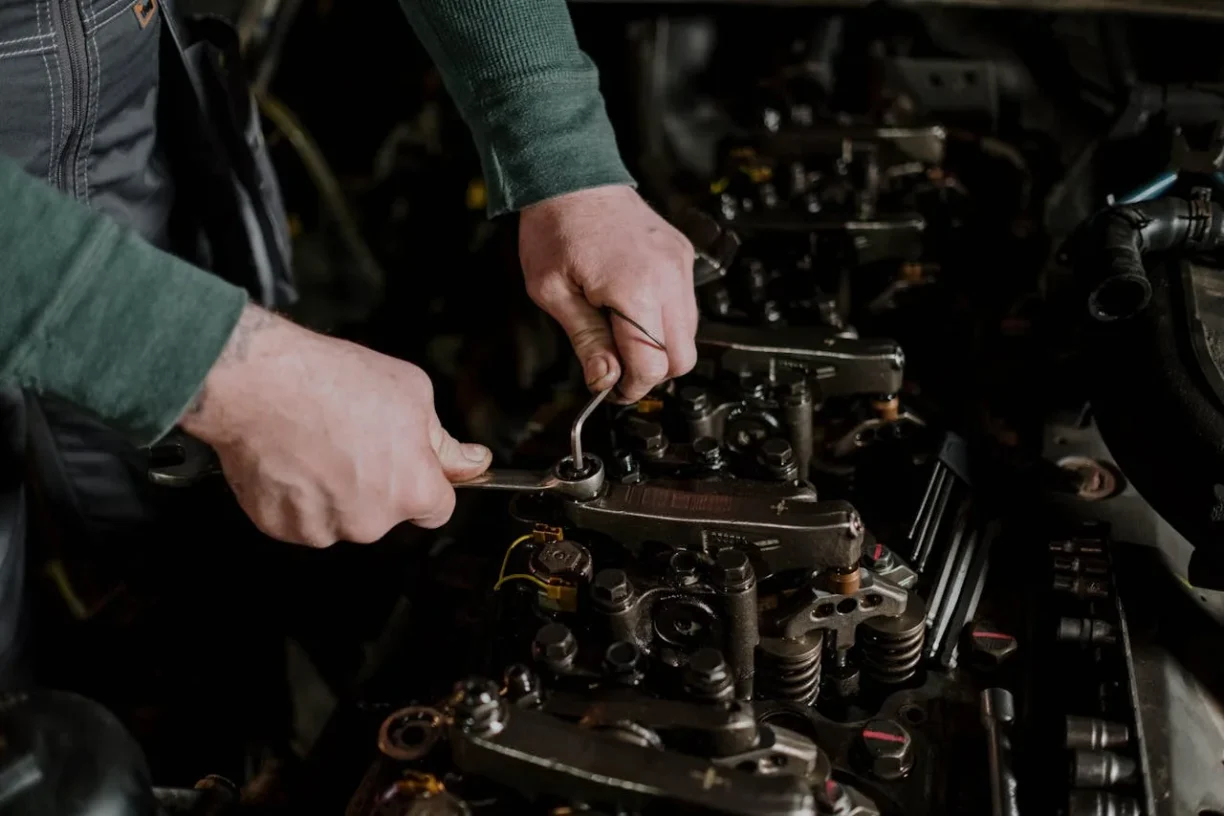
Good habits and some repairs will be the combination to resolve the problem associated with the 6.6-liter gas engine. Let not the issues in thy truck augment. It is important to act quickly in case of a strange sound or a warning light. It is better to have a small repair than a huge bill to pay in the future. We will speak about the fixes that can be tried.
Consistent maintenance is all there is when you desire to have a smooth ride. Strictly follow the schedule of maintenance of your vehicle. Do not overlook changing the oil or make the duration too long. New engines are hot and require oil that can withstand the high pressure and heat.
The most appropriate solution to fight internal wear and tear is to maintain the engine using fresh and quality oil. At least once a week, you should measure your fluid levels, especially when you have to tow or move heavy loads on a regular basis.
You should be able to know what the cause is when your truck is spilling oil. Start by checking external leakages. A leaky gasket or a seal can be replaced, which can be enough in case of minor leaks. In cases where the engine is burning the oil, for example. You see blue smoke; the solution is worse.
This is arguably that it is the piston rings or the valve seals. It is a large task to remedy by opening up the engine. Do not ignore this. The engine will self-destruct when the oil is drained.
Poorly sparking plugs cause a lack of misfiring, poor fuel consumption, and roughness. The system of direct injection can aggravate things. It is important to always check and replace the spark plugs according to the factory schedule.
Pull them out, and look carefully at them. They can tell you the performance of your engine. An oily plug is black and greasy, which means that you have an issue with oil combusting. Burnt plugs on white color are a sign that the engine is overheating.
The easiest way out of the situation is to substitute them with the correct and good quality plugs and restore the power and a smooth running situation.
The timing chain is not an ordinary part that requires routine maintenance, but you need to be responsive to the warning signs. The first sign of a broken timing chain is rattling noises that typically start at the onset of starting the engine and can stop after the warming-up period.
It is the chain hitting the engine block. When you hear this sound, go to the mechanic with the truck straightaway. It is usually complemented by the replacement of the chain, the guides, etc. This repair should not be delayed at all, and the chain is likely to break, which will result in a total and irreversible failure.
This is an important step since these 6.6 gas engines can burn oil very fast. Do not wait until the oil change indicator goes off. Test the dipstick at least once a week. Make it a routine to check it each time you fill up with gas. When it is even a little low, fill it up immediately.
In case you are over-consuming it, you should have a bottle of the right type of oil in your truck. If the problem persists despite your best efforts, owners in Texas and other states may be able to pursue a lemon law claim for recurring engine defects. The best defense against catastrophic failure is to make sure that the level of the oil is always right. The oil level gauge is the emergency meter of the engine. It is important that you check and maintain oil levels from time to time.
Having to work with a defective GM 6.6-liter gas engine may seem like one of those unending headaches, yet you now have the means to defend yourself. You should call someone who will fight on your behalf in case you are experiencing recurrent problems or huge repair expenses on your 6.6 gas engine. And that is something we can do for you.
Having the right guidance from our expert lawyers will allow you to get compensation for the issues you are facing. Contact the Consumer Protection Lawyer Group (CPLG) to get to know your rights.
 $26,534
$24,110
$23,345
$23,000
$22,195
$22,000
$21,586
$21,550
$20,183
$20,000
$20,000
$19,411
$18,000
$18,000
$17,000
$16,000
Consumer Protection
$26,534
$24,110
$23,345
$23,000
$22,195
$22,000
$21,586
$21,550
$20,183
$20,000
$20,000
$19,411
$18,000
$18,000
$17,000
$16,000
Consumer Protection
 Call (424) 677-1115